Art Educator

Classroom Management Plan
No matter what age group of art students I teach, I want my students to know that I deeply care about them and their art education. I feel strongly that my classroom needs to be a place of inspiration, where they are excited to learn, and that the time we spend together impacts their lives. My classroom will be a safe place where students have the freedom to create, think, and talk about art.
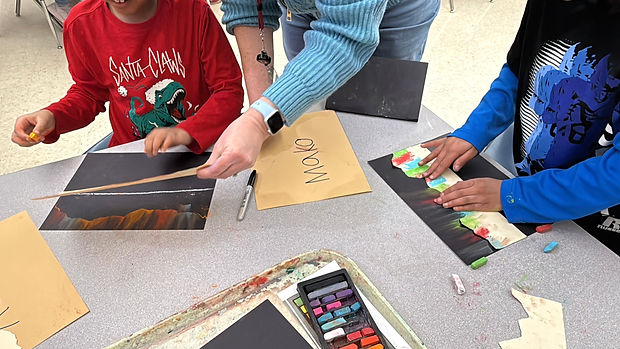
I will create a studio space that is fully stocked with various mediums and materials to create a variety of lessons based on the age of the students and the specific art subjects that I’m teaching. These materials need to be stored and labeled for easy access and also for the safety of students. My goal is to create systems for efficient turnover between classes and mediums so that students know where to find their supplies and where to return them at clean-up. In following the dispositions proposed by the authors of, Studio Thinking 3, in the chapter on Develop Craft: Studio Practice, my students will take ownership of the art classroom and will set-up and clean-up materials and tools with pride and management by assigned jobs or tasks according to their age and projects that we work on.
At the beginning of the school year or semester, I will take the first few classes to teach and model the routines and procedures for arrival and departure from the classroom, how to set-up their workspace, and how to clean-up. When new tools or mediums are being taught, I will model and practice how to use, clean, and store the new materials, so the students can follow by example. My goals are to create an environment of calm, respect, and joy in entering and being part of the art room by having well-described and understood routines and procedures for operating in a studio space.
In alliance with school discipline policies, I will spend the first few classes discussing and creating a set of classroom rules and consequences with the students’ buy-in, ultimately creating a social contract that is agreed upon and prominently displayed in my classroom. This goal comes out of, Discipline with Dignity, by Allen Mendler, Brian D. Mendler, and Richard Curwin (2018). My classroom management plan will include respecting the right of all to learn and create art, and to have personal space to create without other students distracting them from their work. I will create a point system to reflect their ability to listen to and follow directions and participate in the daily lesson that will be reflected in their grade. This methodology was recommended by Michael Linsin in, Classroom Management for Art, Music, and PE Teachers (2014), and also in his particular plan for grades 7-12, The Smart Classroom Management Plan for High School Teachers (2018). This subtle method provides equitable accountability and consequences without confrontation and minimal disruption to classroom instruction.
A well-run classroom management plan requires consistency and attention to daily mindfulness on my part to carry out routines, require accountability for students to operate the procedures effectively, and to give out consequences when rules are broken. Remembering my objectives will be important as I run into behavioral problems and difficult classes that challenge my desire to be calm and exude a pleasant demeanor. In the end, my goal is to protect students’ right to learn and enjoy school while imparting life lessons through the enduring ideas in my lesson plans.
